

There is something different about hunting with a bow.
The distance is shorter. The margin for error is smaller. Getting into position matters just as much as making the shot. For hunters who enjoy that challenge, bow hunting in Texas offers plenty of opportunities across a wide range of terrain and game.
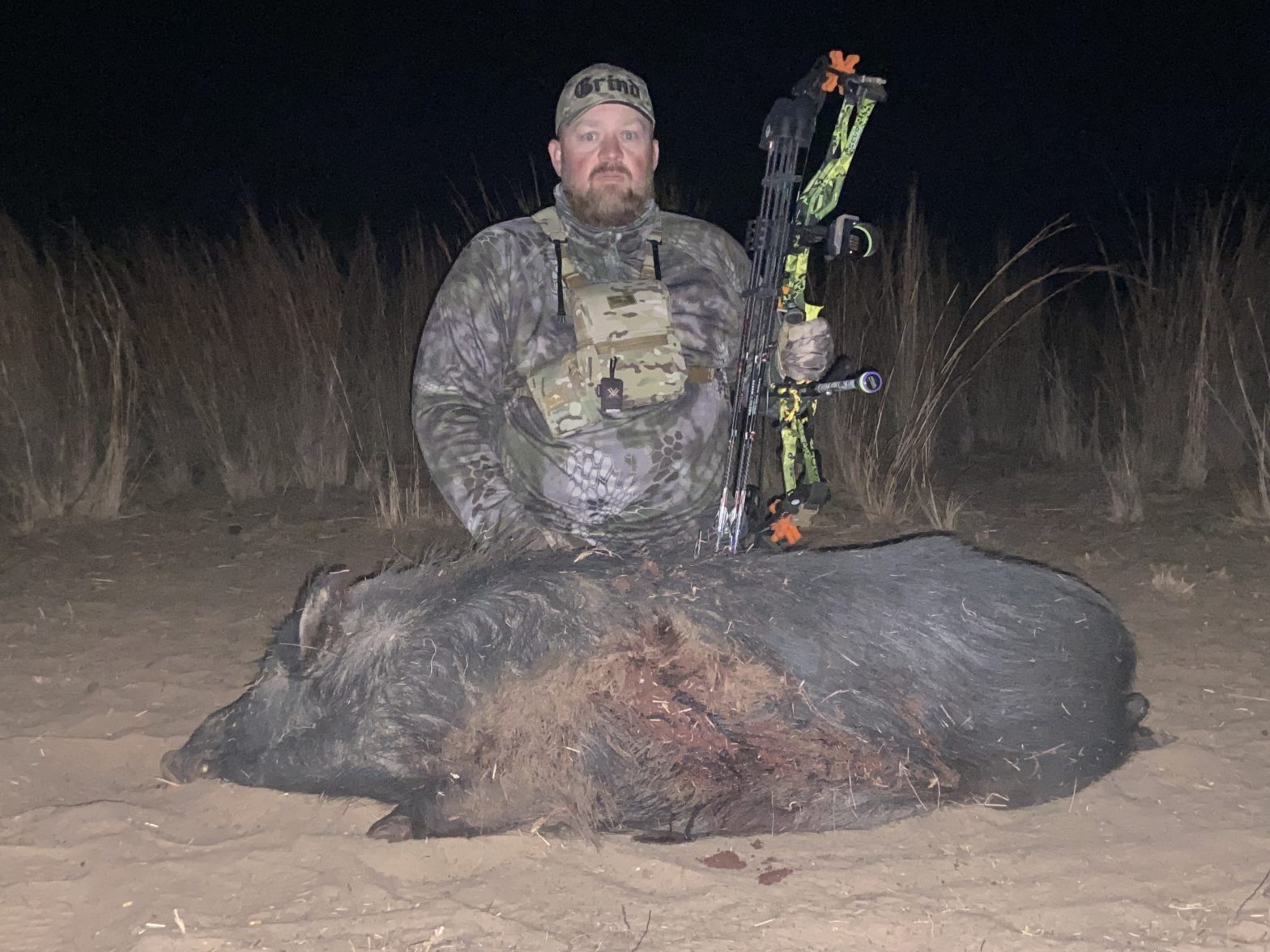
Whitetail deer may be the first animal that comes to mind when most people think about Texas bow hunting, but feral hogs have become another popular option for archery hunters. For hunters who want close-range encounters, flexible hunting opportunities, and a chance to spend a few days on a private Texas ranch, bow hunting wild hogs is hard to beat.
At SandFork Ranch in West Tex
as, we regularly welcome hunters using compound bows, crossbows, rifles, and other legal hunting equipment. If you're considering your first Texas bow hunting trip—or looking for somewhere new to hunt—here are a few things worth knowing before you arrive.
Why Bow Hunting in Texas Is So Popular
Texas offers a combination that's difficult to find in many other states: huge amounts of private hunting land, diverse wildlife, varied terrain, and a long hunting tradition.
Depending on the species and location, bow hunters can pursue animals including:
- Whitetail deer
- Mule deer
- Wild turkey
- Feral hogs
- Javelina
- Various exotic species on private ranches
Each hunt presents a different challenge.
A whitetail hunter may spend hours studying deer movement and waiting for an animal to step into a shooting lane. A turkey hunter may need to draw without being detected by a bird at close range. Hog hunters have to contend with animals that can appear quickly, travel in groups, and rarely stay still for long.
That variety makes Texas an appealing destination for both experienced archers and hunters who are just beginning to hunt with a bow.
Bow Hunting Wild Hogs in Texas
For many archery hunters, bow hunting hogs in Texas is one of the most exciting ways to experience the sport.
Hogs present a very different challenge from shooting a bow at a target. You have to wait for the right animal, the right angle, and the right opportunity while remaining undetected at close range.
At SandFork Ranch, our archery stands are generally positioned for shots of approximately 20 to 25 yards. That gets bow hunters considerably closer to the action than the roughly 80-yard shots our rifle hunters commonly experience.
That distance is part of what makes an archery hog hunt so exciting.
You aren't simply trying to hit a distant target. You're watching the animals move, waiting for a clean shot opportunity, controlling your movement, and making decisions while hogs are only a short distance away.
If hog hunting is your primary interest, you can learn more about our Texas Archery Hog Hunts and the way our hunts are set up specifically for bow hunters.
Why Hogs Are a Great Option for Bow Hunters
One of the biggest advantages of hog hunting is flexibility.
Unlike whitetail deer and other regulated game animals, feral hogs on private property are not restricted to one short archery season. That gives hunters much more freedom when planning a Texas bow hunting trip.
Hog hunting also gives archers an opportunity to practice many of the same skills used on other big-game hunts:
Getting Close
Bow hunting requires you to get much closer to an animal than most firearm hunting. That makes wind direction, movement, noise, and scent especially important.
Waiting for the Right Shot
Seeing a hog doesn't automatically mean you have a shot. Good bow hunters learn to wait until the animal presents the proper angle rather than forcing an opportunity.
 Remaining Calm at Short Range
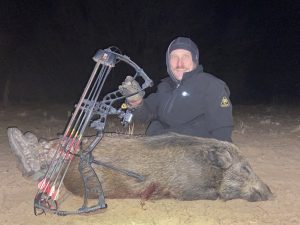 Remaining Calm at Short Range
Everything feels different when an animal is standing 20 yards away instead of 100 yards away. Staying composed enough to make a smooth draw and controlled shot is part of the challenge.
Understanding Animal Movement
Wild hogs are constantly moving, feeding, and interacting with other hogs. Watching that behavior and anticipating where an animal will move can make the difference between getting an opportunity and going home without one.
For hunters hoping to improve their archery hunting skills, hogs provide plenty of real-world practice.
Compound Bow, Recurve, or Crossbow?
Texas recognizes several forms of lawful archery equipment, including compound bows, recurved bows, longbows, and crossbows.
Which one you bring largely comes down to the kind of hunting experience you want.
Compound Bows
Compound bows are probably the most familiar choice for modern bow hunters. Their sights, let-off, and adjustability make them practical for hunters who want accuracy while still experiencing a traditional bow hunt.
Recurve and Longbows
Traditional archery adds another level of difficulty. Without the mechanical advantages of a compound bow, successful hunting requires plenty of practice and confidence at shorter distances.
Crossbows
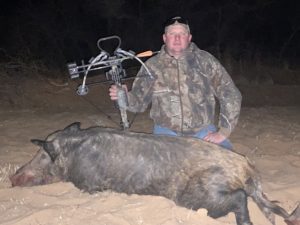
Crossbows are another popular option for Texas hunters. They provide an archery-style hunt while offering a different shooting platform that some hunters find easier to use consistently.
Whatever you choose, know your equipment before arriving at the ranch. A hunting trip is not the place to discover that your bow hasn't been properly sighted in.
Practice at Realistic Hunting Distances
One of the best things you can do before a Texas bow hunt is practice at distances similar to what you expect in the field.
For SandFork hog hunters, that means spending plenty of time shooting around the 20- to 25-yard range.
Long-distance practice can certainly improve your shooting, but don't neglect close shots simply because they appear easier.
Practice:
- Shooting from a seated position
- Drawing slowly and quietly
- Shooting while wearing your hunting clothes
- Holding at full draw before releasing
- Shooting at different angles
- Identifying specific aiming points rather than simply aiming at the center of a target
The goal isn't just hitting the target.
It's being able to make the shot calmly and consistently when an actual hog walks into range.
Shot Placement Matters When Bow Hunting Hogs
Wild hog anatomy is different from deer anatomy, and bow hunters should understand those differences before taking a shot.
A hog's vital area sits relatively low and forward in the body. Large mature boars can also develop a thickened layer of tissue around the shoulder area commonly referred to as a shield.
Because of that anatomy, hunters should be patient and wait for a high-percentage shot rather than attempting difficult angles.
Good shot selection is part of responsible hunting. If the angle isn't right, waiting is usually the better decision.
There will always be another opportunity.
Hunting Hogs From a Blind
One of the most effective ways to bow hunt hogs is from a ground blind or stand overlooking an area hogs regularly visit.
At SandFork Ranch, we primarily hunt from stands positioned over feeders or fed roads. Hunters are transported to and from their stands, and we also transport harvested game back to camp.
For bow hunters, hunting from a blind has several advantages.
It allows you to remain concealed while hogs approach, reduces unnecessary movement, and gives you time to evaluate animals before deciding whether to take a shot.
It also means patience becomes part of the hunt.
You may hear hogs before you see them. You may watch several animals enter together. Sometimes the animal you want doesn't immediately give you a clean angle.
That's bow hunting.
And when everything finally comes together at 20 yards, the wait feels worth it.
Can You Spot and Stalk Hogs With a Bow?
Yes, and when conditions are right, it can be one of the most exciting ways to hunt.
SandFork allows spot-and-stalk hog hunting during the midday period. We don't allow spot-and-stalk hunting during designated stand-hunting times, which helps us manage hunting activity safely across the property.
A successful spot-and-stalk bow hunt requires using terrain and cover to close the distance without being detected.
Wind is especially important. Hogs have an excellent sense of smell, and approaching from the wrong direction can end a stalk before you ever get within bow range.
Move slowly, use available cover, and don't rush the final approach.
What Should You Bring on a Texas Bow Hunt?
Your exact gear list will vary depending on the season, weather, and species, but a few items should be on nearly every bow hunter's list.
Bring your bow or crossbow along with enough arrows or bolts, broadheads appropriate for your intended hunt, a release if you use one, rangefinder, binoculars, comfortable hunting clothes, boots, and any small tools or replacement parts you normally carry for your bow.
Texas weather can also change significantly from morning to afternoon, so layers are useful.
Most importantly, arrive with equipment that has already been checked, practiced with, and sighted in.
Do You Need a Hunting License to Bow Hunt in Texas?
That depends on what you're hunting.
Texas requires hunting licenses and, in some circumstances, additional endorsements for regulated game species such as whitetail deer and turkey. Archery-only deer seasons also have their own requirements and season dates.
Feral hogs are different.
Under current Texas law, a hunting license is not required to hunt feral hogs on private property when you have the landowner's authorization.
Regulations can change, however, and different species have very different requirements. Hunters should always check the latest Texas Parks & Wildlife Department regulations before traveling.
When Is the Best Time for Bow Hunting in Texas?
There isn't one answer because it depends on the animal you're pursuing.
Whitetail and other game species are governed by established hunting seasons. Feral hog hunting gives hunters considerably more flexibility because hogs can be hunted on private land throughout the year.
At SandFork, we hunt hogs year-round.
Seasonal conditions can change how hogs move and when they're most active, but there isn't one single month when you have to plan your trip.
That makes hog hunting especially useful for archers whose schedules don't line up with the relatively short fall archery seasons for other game.
Bow Hunting at SandFork Ranch in West Texas
SandFork Ranch is a family-owned and operated hunting ranch near Anson, Texas.
Our goal isn't to turn your hunt into an overly complicated outfitter experience. We want hunters to come out, enjoy the ranch, have good opportunities, and leave wanting to come back.
Our hog hunts are semi-guided. We transport hunters to and from the stands and retrieve harvested animals. Archery setups generally offer shots around 20 to 25 yards, while midday spot-and-stalk opportunities allow hunters to experience the property in an entirely different way.
Our current hog hunting package includes:
- Two days of hunting
- Two nights of lodging
- Two hogs of any size
- Additional hog opportunities
- Arrival at 1:00 p.m. on the first day
- Departure at 11:00 a.m. on the third day
Hunters also have access to our ranch facilities for handling harvested hogs.
Whether you're an experienced bow hunter or you've always wanted to try bow hunting in Texas, wild hogs provide an excellent reason to make the trip.
Ready to Try a Texas Archery Hog Hunt?
Bow hunting forces you to slow down, get closer, and earn the opportunity.
That's exactly why so many hunters enjoy it.
And when the animal on the other side of your bow is a wild Texas hog standing only 20 or 25 yards away, things get exciting in a hurry.
If you're ready to experience it yourself, explore our Texas Archery Hog Hunts to learn more about bow hunting at SandFork Ranch, or contact us to find available hunt dates.
SandFork Texas Hog Hunting Ranch
Anson, Texas
806-778-5949